
Our Belief
Our Difference
Our Promise
Our Unit of Analysis
An observable, measurable action taken by an individual or a group in a specific situation.
Behavior is a function of the person and their environment.
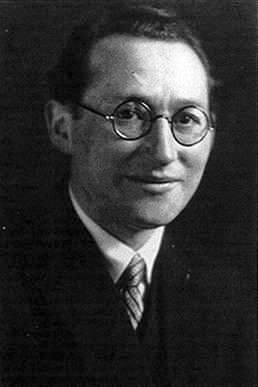
Kurt Lewin
Our Methodology
Traditional change management runs on plans and messaging. We take a different route and apply the scientific method to changing how people work.
Get to know the reality on the ground: how people actually work, what drives them and what holds them back.
Draw on behavioral science to pinpoint what will genuinely shift behavior.
Test concrete interventions, tailored to the context and respectful of the people involved.
Assess the results, fine-tune the interventions and make the new practices stick.
What Sets Us Apart
Our protocol and tools come straight from recent research.
Our interventions close the gap between intention (buy-in) and action (adoption).
Every intervention rests on an objective diagnosis and a measure of its impact.
We target specific behaviors that can be observed and measured.
©2026 Alamein. All rights reserved.

Most change and transformation programs fall short of their goals.
Martin E. Smith, Success rates for different types of organizational change, Performance Improvement, 41(1), 2002, pp. 26–33.
Human Capital
A Drain on Your People
Source: Gartner, Strategies to Build Readiness for Transformational Change, 2025.
Financial Capital
Value That Disappears
42%
of the expected financial value is lost in every transformation.
Source: McKinsey & Company, How to Implement Transformations for Long-Term Impact, 2023.
Health Capital
Employees who go through organizational change face a much higher risk of mental health problems.
Source: Backhaus et al., Organizational change and mental health, BMC Public Health, 2024 (53,295 employees).
Change without Eroding the Human Foundations of Performance.